At a time when many Jews are feeling insecure about displaying their Jewishness openly, it is important to remember that Purim is not just about concealment.
Omri Gal Kornblum
Omri Gal Kornblum
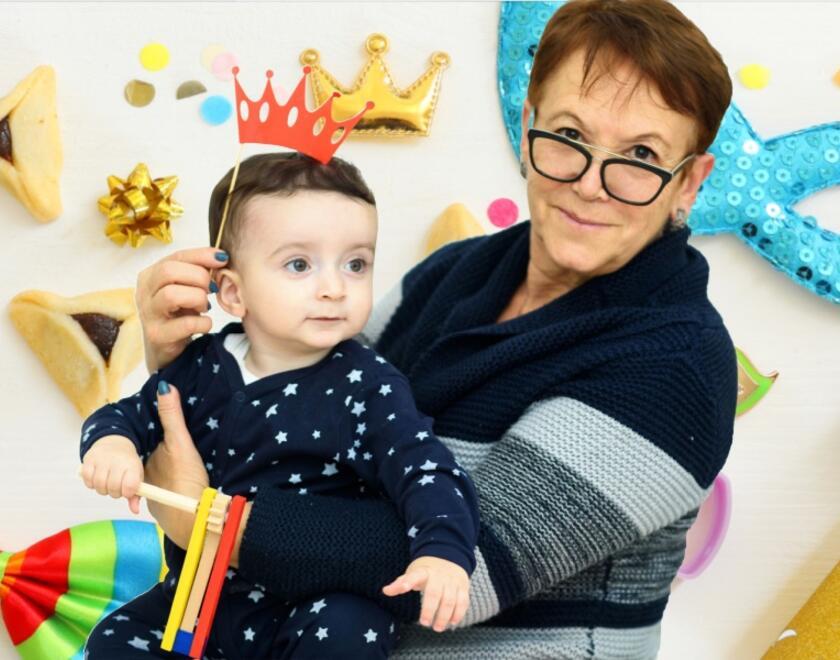
Purim is a festival of disguise and revelation. In the Book of Esther, God’s name does not appear, Jewish identity is initially concealed, and survival depends on when – and how – to reveal who we truly are. For one day a year, we play with concealment. We put on masks, dress up as kings and queens, villains and heroes, hiding our identity in plain sight.
But for many Jews these days, the mask is no longer just a costume, and hiding one’s identity is no longer a playful ritual.
Recent data from JPR’s Jews in Uncertain Times Survey offer a sobering lens through which to read Purim this year. On the one hand, there is resilience. A striking 85% of British Jews say they feel able to practise Judaism freely in the UK, with 41% strongly agreeing and 44% somewhat agreeing. These are not trivial figures. They reflect a community that continues to celebrate, gather, learn and live Jewishly in public and in private.
Still, around one in ten Jews disagree that they are able to practise their religion freely in the UK. These are among the many thousands of British Jews who do not experience Britain as a space of unqualified comfort.
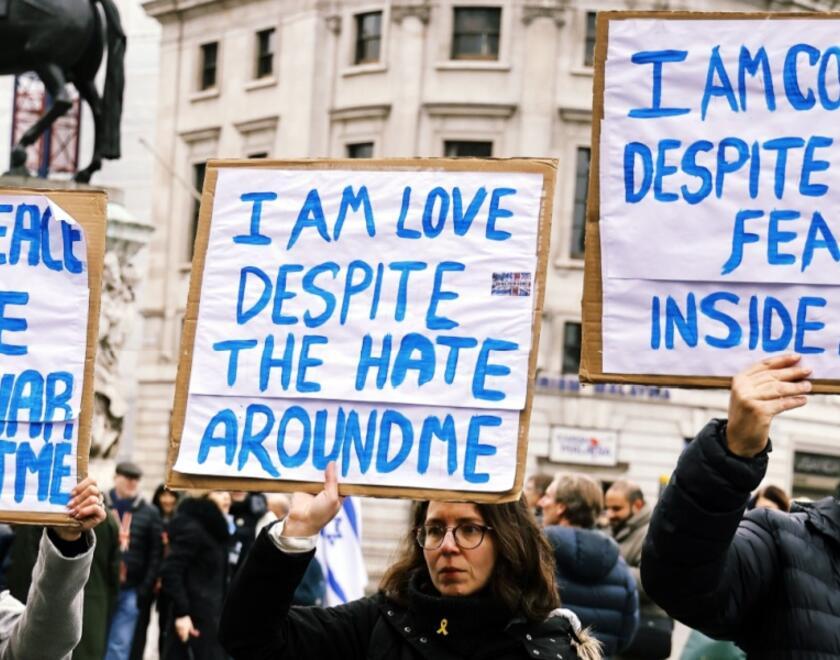
Even more telling is what happens when we move on from religious practice, which usually takes place within the community or one’s private household, and ask instead about everyday visibility. When respondents were asked how confident they feel in openly displaying Jewish symbols, we found that nearly three in ten (29%) rate themselves at the lower end of a 0-10 scale – scoring between 0 and 3 – indicating very low confidence in displaying their Jewishness. At the other end, just a quarter (25%) expressed high confidence, rating themselves 8 to 10.
For much of modern Jewish history, concealment has not been theatrical but strategic. Names were changed. Clothing was adapted. Accents were softened. The instinct to blend in has often been a survival mechanism. In other words, visible Jewishness hasn’t always been a neutral act. For significant parts of our community, it carried risk, hesitation or calculation.
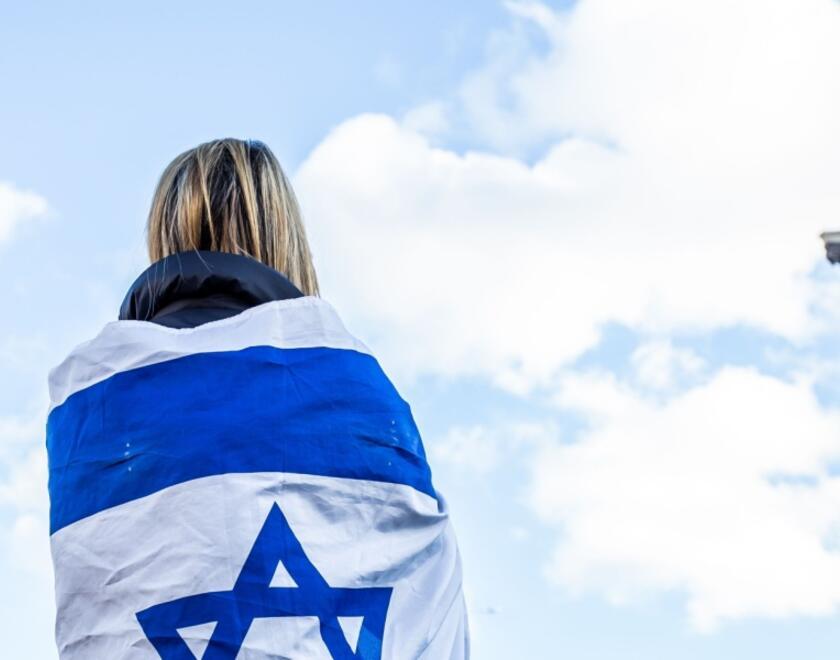
The JPR findings suggest that, for some British Jews, this instinct has not disappeared. It may manifest in small decisions: whether to wear a Magen David necklace outside a shirt, whether to post a Jewish-themed message online, or whether to mention Israel in a workplace conversation. None of these is a dramatic act. But collectively, they amount to a negotiation of identity.
That negotiation is not uniform. The data show variation by age, denomination and level of communal connection. Those more embedded in Jewish life – through synagogue affiliation or stronger religious identification – often report higher confidence. This suggests that visibility is shaped not only by external pressures but also by internal anchoring. The stronger one’s Jewish networks and levels of religiosity and observance, the less alone one may feel in displaying Jewishness.
Purim, however, is not only about concealment. It is also about reversal: overcoming a threat. Masks are worn not because Jewish identity needs to be erased, but because it is secure enough, even for a moment, to be played with. There is a profound difference between choosing to hide and feeling compelled to do so.
On Purim, we choose the mask. We exaggerate identity rather than suppress it. We parade through the streets in costume. Children march in community celebrations dressed as Queen Esther or Mordechai. The very visibility of Jewishness becomes part of the celebration.
Perhaps that is why Purim might feel particularly powerful this year. It allows us to experience public Jewishness not as risk but as joy. It can remind us that concealment is not the whole story. Esther changes the fate of her Jewish community not because she had hidden her identity, but because she ultimately stepped forward.
The data tell us that most British Jews still feel able to practise freely. That is something to cherish and protect. But the figures also tell us that a significant minority feels uncertain about being visibly Jewish. That reality demands attention – from policymakers, from communal leaders, from within the Jewish community, and from wider society. A society in which Jews feel able to celebrate Purim loudly, colourfully and without hesitation is a society that is working.
The masks we wear on Purim are a choice. The challenge for the rest of the year is to ensure that they stay that way.
Director of Communications
Director of Communications
Omri holds a Master’s degree in Political Communication and a Bachelor’s degree in Journalism and International Relations, both from the Hebrew University of Jerusalem. He...
Read more