How can we turn Jewish tradition and growing environmental awareness into action? Looking into the latest data might help.
Omri Gal Kornblum
Omri Gal Kornblum
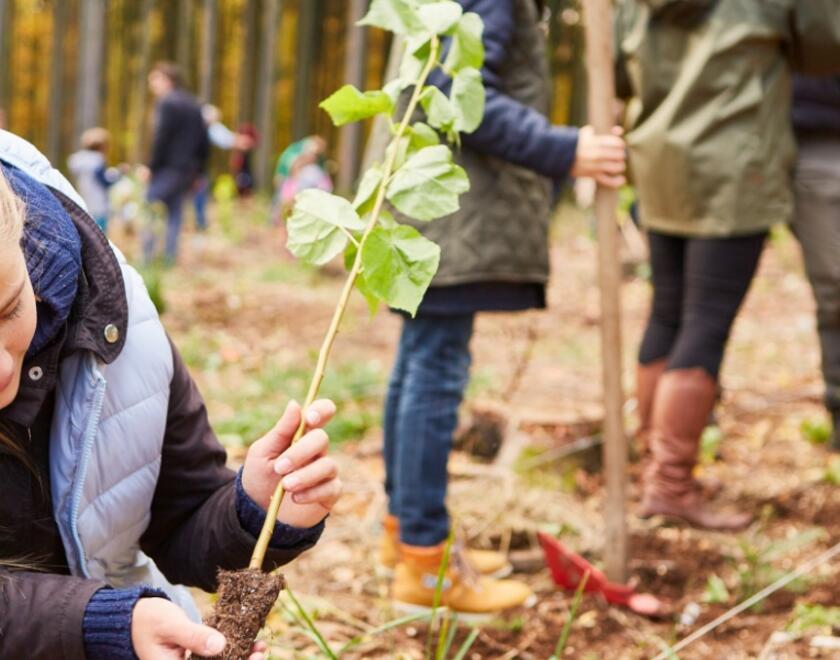
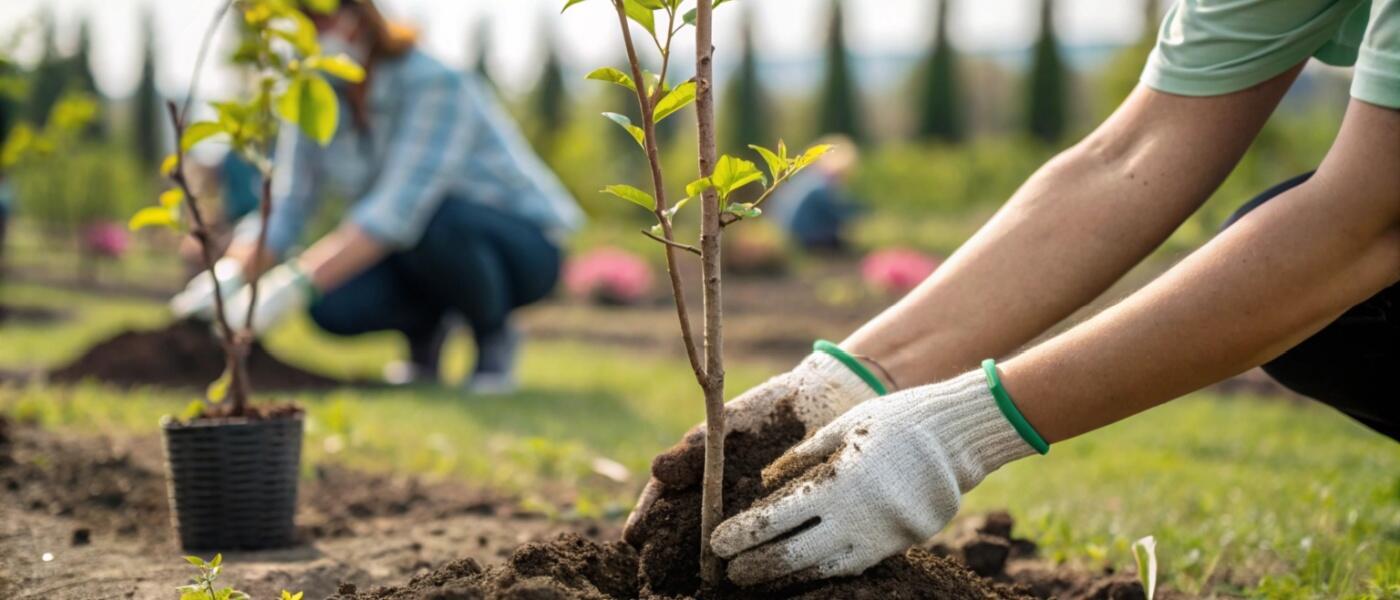
Tu b’Shevat, the Jewish “New Year of the Trees”, has long connected Judaism to the natural world. Originally linked to agricultural tithes in the Land of Israel, the festival evolved in the Diaspora into a symbolic celebration marked by eating fruits grown in Israel, and in modern Israel by tree planting. In recent decades, Tu b’Shevat has been reinterpreted as a Jewish environmental holiday, emphasising ecological responsibility and humanity’s duty to protect the planet.
This ecological sensibility is not confined to one day a year. Jewish law contains multiple frameworks that promote restraint and sustainability. Alongside dietary laws governing consumption, Judaism includes broader principles about humanity’s relationship with the natural world. Central among them is Shnat Shmita, the Sabbatical Year. Observed every seventh year, it requires agricultural land in Israel to lie fallow, limits farming, and makes produce freely accessible. Shmita promotes environmental rest, social equity, and the recognition that the land is not ours to exploit indefinitely.
JPR’s 2021 study, the most comprehensive research on Jewish attitudes to climate change in the UK, shows that British Jews are overwhelmingly convinced the climate is changing. 92% of over 4,000 respondents said it is “definitely” or “probably” changing, with almost seven in ten saying it is definitely changing. Two-thirds of British Jews said climate change is mainly or entirely human-made, a higher proportion than the UK public at the time of the survey, although more recent polling suggests the wider population has since caught up.
Yet concern is more uneven when diving into the data. For example, only about two in five British Jews reported being very or extremely worried, pointing to a familiar gap between awareness and urgency. These differences are strongly shaped by denomination and politics: Progressive Jews and those on the political left are far more climate-conscious than Orthodox Jews and those on the right, a divide mirrored across many societies.
International comparisons reveal minority communities are more climate-aware than the general public. In the United States, American Jews are far more likely than the general population to attribute climate change to human activity, and the same can be said about Hindus, Buddhists and Muslims. In Israel, however, where Jews form the majority, Jewish respondents are slightly less likely than Arab citizens to see climate change as human-caused, suggesting political context and wider social norms all shape how climate change is understood.
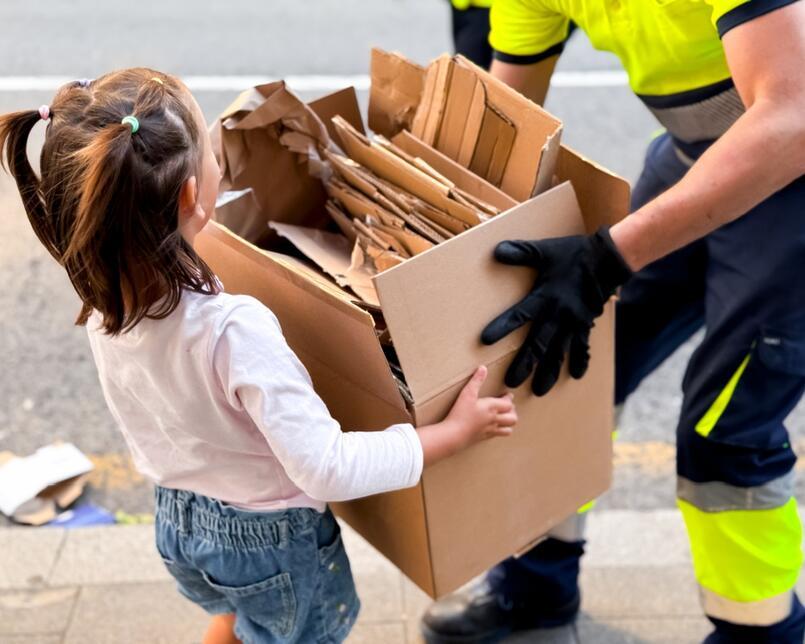
A young girl delivers cardboard for recycling. younger people are consistently more likely to view climate change as human-made and personally threatening.
Religiosity plays a decisive role. Across countries, concern declines sharply from secular and traditional Jews to religious and ultra-Orthodox communities. This pattern is not unique to Jews, but reflects a broader relationship between religious conservatism, political orientation and environmental attitudes.
Age matters too. Across the UK, Europe, Israel and the United States, younger people are consistently more likely to view climate change as human-made and personally threatening. JPR data shows that British Jews under 40 are far more likely than older cohorts to say climate change is entirely human-made, revealing a clear generational divide that mirrors trends in broader society.
Yet awareness does not automatically translate into action. Like many others, British Jews may accept the reality of climate change while struggling to change their everyday behaviour. The issue can feel distant, individual actions may seem insignificant, and other concerns - such as antisemitism, economic security or geopolitics - often take precedence. These dynamics are reflected politically: despite high levels of awareness and concern, only a 18% of British Jews say they intend to vote for the Green Party - though the level of support has climbed significantly in recent years.
The data suggest that framing matters. Climate action is unlikely to gain traction if presented primarily as a partisan or ideological cause. For more religious or right-leaning Jews, engagement may resonate more when rooted in Jewish law, communal responsibility and continuity — drawing on concepts such as bal tashchit (the prohibition against waste), Shmita, and stewardship of creation. These frames align environmental responsibility with religious obligation rather than political identity.
Generational dynamics also offer opportunities. Younger Jews, who are more concerned, can play a key role as educators within families, synagogues and communal institutions. At the same time, communal spaces matter. Synagogues, schools and charities can normalise environmentally responsible behaviour by embedding it into everyday practice — from energy use and food choices to education and institutional decision-making.
Finally, continued research is essential. Benchmarking Jewish attitudes against those of wider society allows communities to understand where they lead, where they lag, and which approaches work. Turning awareness into action is not a one-off effort but an ongoing process.
Judaism has always linked faith, land and responsibility, and Tu b’Shevat is here to remind us of that. The challenge now is to ensure that this awareness shapes not only what Jews believe, but also how they live.

Director of Communications
Director of Communications
Omri holds a Master’s degree in Political Communication and a Bachelor’s degree in Journalism and International Relations, both from the Hebrew University of Jerusalem. He...
Read more