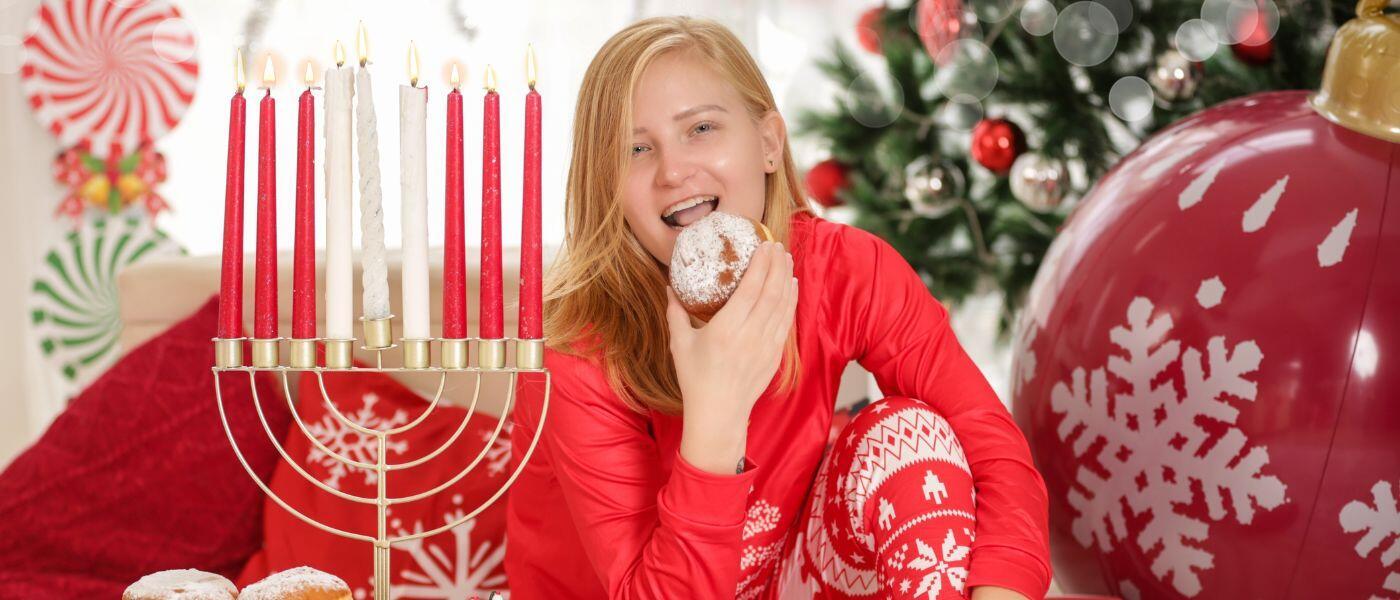
The transformation of Chanukah, from an insular ‘us and them’ holyday to a universalist celebration, is somewhat of a miracle
Dr Keith Kahn-Harris
Dr Keith Kahn-Harris
Throughout the surprising twists and turns of the improbable history of the Jewish people, there have been few developments as unlikely as the transformation of Chanukah.
During the upcoming eight nights, social media and Jewish publications will be filled with the sight of the Jewish great and good lighting candles and eating doughnuts with the non-Jewish great and good: Prime ministers and presidents, mayors and councillors, religious leaders and the odd celebrity will all be pictured smiling with their Jewish counterparts at candle-lighting ceremonies across the world. There will be talk of lights in the darkness and hopes for the future.
Why is this surprising? It’s because Chanukah is one of our least universal and most insular festivals. It commemorates stubborn survival and an absolute refusal to join in with the dominant (Greek) culture of the day. Its narrative is not one of peace and goodwill to all men. Chanukah’s closest equivalent is Purim, with its similar message of Jewish defiance and obstinacy.
Of course, the reasons why Chanukah has evolved in the post-war period in the way it has are not hard to fathom. As Christmas has become more secularised in Western countries, it has presented an opportunity to universalise Chanukah and, at times, a pressure to do so as well. Christmas, its festivities and gift-giving, is incredibly alluring to Jews, particularly to Jewish children.
Even Jews who avoid any acknowledgement of Christmas sometimes use Chanukah as an opportunity to insert themselves into the festive season: In Haredi communities, local non-Jewish dignitaries are sometimes invited to candle-lighting and, if they take away the impression that Chanukah is our Christmas, no one is likely to disabuse them of the notion if they don’t say it out loud.
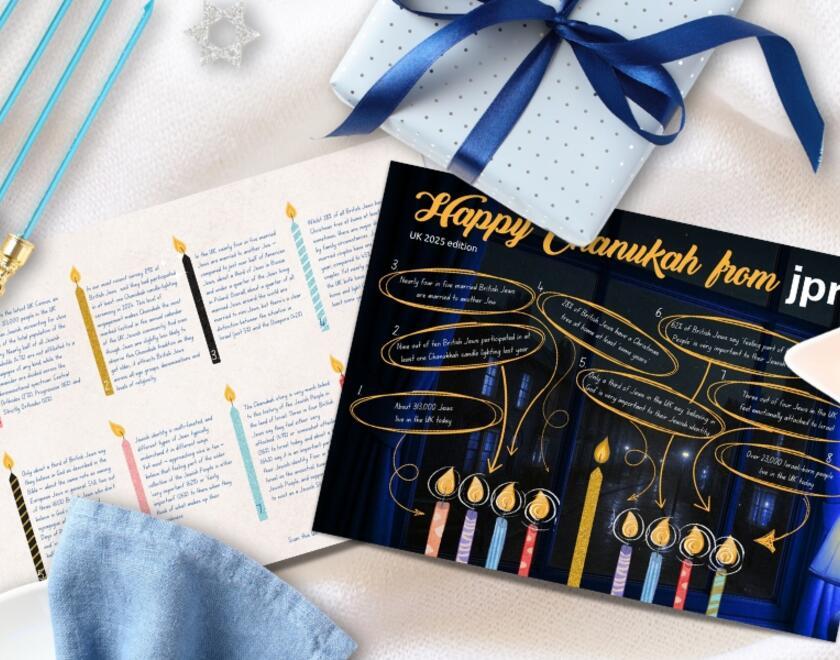
JPR’s data on Christmas observance among British Jews shows how popular the festival is: An analysis of our 2022 National Jewish Identity Survey found that almost 30% of British Jews have a Christmas tree at home, at least some years. That percentage falls amongst older respondents and those who are more traditionally Jewishly observant. It rises, as one might expect, amongst Jews who are married to non-Jews.
Some Jews will view these statistics as a sign of worrying trends in assimilation. But viewed from an observant Christian perspective, you might equally see them as a sign of worrying trends in secularisation. Either way, Jewish participation in Christmas does not seem to weaken Jewish observance of Chanukah. Our 2025 survey data shows that 90% of all British Jews reported participating in at least one Chanukah candle-lighting ceremony last year.
Chanukah is, in fact, observed by more Jews than those who attend a seder (84%), fast on Yom Kippur most years (63%) or light candles every Shabbat (56%). This data suggests that ‘Christmukah’ is very much a thing, and a significant minority of British Jews combine rituals from both festivals. The data also suggests that some Jewish festivals and observances remain popular with the majority of Jews, even amongst those who are secularised and assimilated in other respects.
Perhaps the ironies and contradictions of Chanukah as it is observed in Britain today only seem like that from the outside. Jews are adept at what social scientists and scholars of religious studies call ‘syncretisation’ – knitting together disparate practices in ways that may look contradictory but can, if done enough, feel surprisingly seamless.
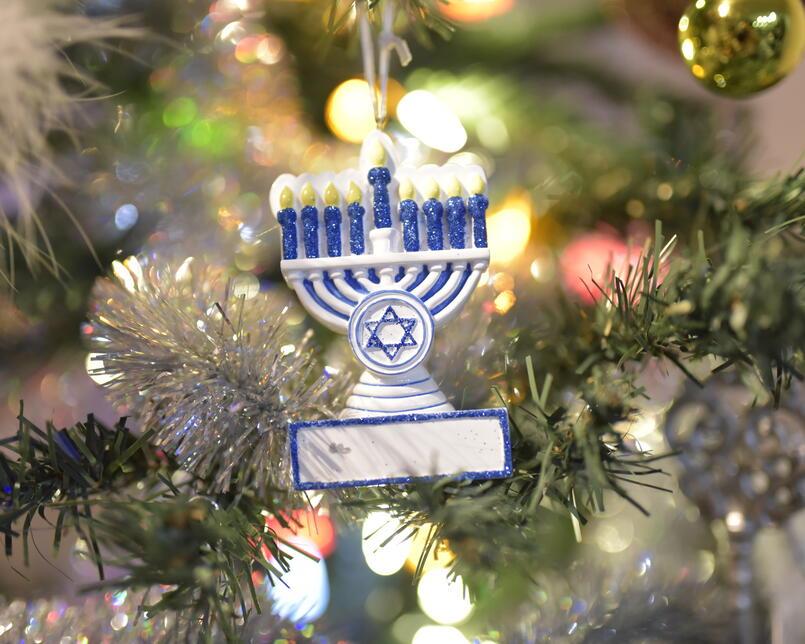
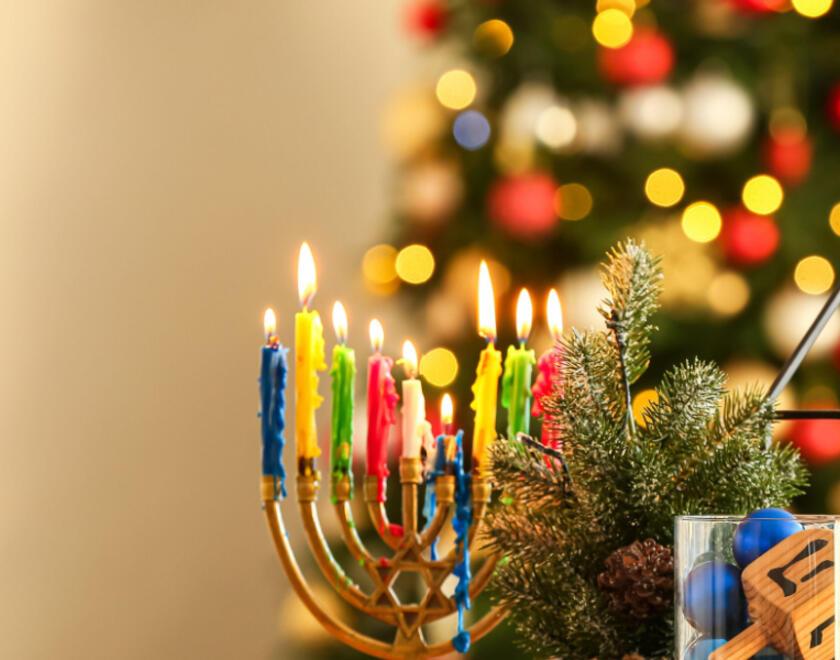
An Menorah-shaped ornament hanging from a Christmas tree.
Still, there are also risks in how Chanukah comes across to the outside world. Even orthodox-led public ceremonies might not be able to avoid giving off the impression to non-Jews that Chanukah is just a Jewish Christmas – just happening in the same month as Christmas is enough to base that misapprehension on. Also, the syncretic Jewish Chrismukah may look to some non-Jews as if Jews are hypocrites or are not deeply attached to Jewish identity.
Maybe Jews should pick another festival to show off to the world; one that is fun to celebrate without demanding too much, that doesn’t coincide with a non-Jewish festival, isn’t as open to misinterpretation as Chanukah is, and is easy to invite non-Jews to…
My suggestion is Tu B’Shvat: Gorging on fruit, a non-scary environmental message, and it breaks up the post-Christmas greyness – what’s not to like?
Until that time, perhaps Jews should embrace the American tradition of greeting their non-Jewish friends with happy holidays and their Jewish ones with chag sameach. Happy Chanukah is, perhaps, a little too Christmasy.
Chag Sameach and Happy Holidays to you all!

Senior Research Fellow and Project Director of the European Jewish Research Archive
Senior Research Fellow and Project Director of the European Jewish Research Archive
Keith Kahn-Harris has been Project Director of the European Jewish Research Archive since its inception in 2014, managing the collection process and analysing its holdings...
Read more