A confident Jewish future cannot rely on insecurity to create belonging; Jewish life has to be compelling enough that people choose it.
Dr Jonathan Boyd
Dr Jonathan Boyd
One reason people become attached to certain stories is not that they know they are true, but because they desperately want them to be
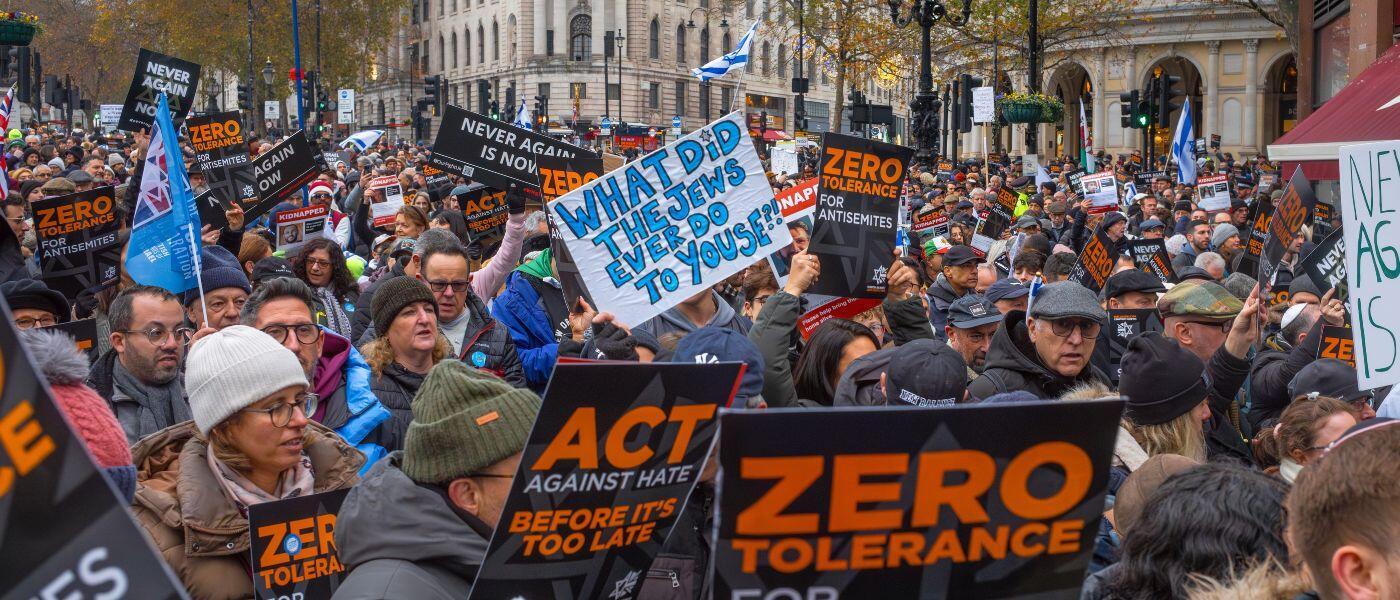
Since October 7, one such story has circulated widely in Jewish communities worldwide. It’s the story of the ‘October 8 Jew’: someone who had previously been distant from Jewish life, but who suddenly rediscovered their Jewishness in the aftermath of the Hamas attacks, the war, and the wave of antisemitism that has swept across much of the world.
The story appeals because it offers something hopeful at a difficult time. Amid loss, anxiety and division, it suggests renewal: Jews who had drifted away are coming back; a new generation is discovering its Jewish identity; crisis has become a catalyst for rebirth. But is it actually true?
The findings from JPR’s latest study of British Jews after October 7 suggest a more complicated reality. By following the same group of British Jews between 2020 and 2025, the research lets us see not just what people thought at any one moment, but how they changed through one of the most turbulent periods in recent Jewish history.
Some of the findings fit perfectly with the October 8 narrative. Overall, attachment to Israel increased. Identification with Zionism strengthened. More people contemplated aliyah. Concern about antisemitism rose sharply. Feelings of safety declined. Anxiety increased.
Yet beyond those changes, the evidence for a broader Jewish reawakening is much harder to find. Overall levels of Jewish identity remained remarkably stable. Religiosity remained stable. Synagogue participation remained stable. Even attachment to the Jewish community, which rose immediately after October 7, later settled back to where it had been before. Put simply, many of the deeper foundations of Jewish life look strikingly similar now to how they looked before all of this started.
In many ways, that’s quite reassuring. At a time when many feared profound damage to Jewish confidence and belonging, simple continuity comes as a relief. But it should also challenge us. The data suggest not that October 7 created a wave of newly engaged Jews, but that it changed how Jews thought about Israel and how they experienced being Jewish in contemporary Britain. British Jews emerged from this period feeling more emotionally attached to Israel, more concerned about antisemitism, and less secure about their place in society. They did not emerge substantially more engaged in Jewish life.
That distinction matters because Jewish leaders, educators and community professionals have long grappled with the same question: how do we create forms of Jewish life that people actively choose to participate in? How do we move people from simple identification to active engagement?
There has often been a temptation to believe that moments of crisis might help answer that question. Perhaps a dramatic event, or even just education about one, will awaken dormant Jewish identities. Perhaps external threats will encourage people to reconnect.
Well, we have now lived through a real-world test of that proposition. And the evidence suggests that while crises can sharpen identity, strengthen solidarity, and remind people why their Jewish connections matter, they seem far less capable of generating sustained participation, learning, religious engagement, or community involvement. In short, they change what Jews worry about and pay attention to, without fundamentally changing how Jews live as Jews.
There is another reason to be cautious. Much of the change we can see occurred alongside rising anxiety, heightened concern about antisemitism and declining feelings of safety. In other words, it developed in the shadow of vulnerability. That doesn't make it any less real, but it should make us think carefully about what kind of Jewish future we want to build. A community cannot rely indefinitely on crisis to generate belonging, and it shouldn't want to. The strongest forms of Jewish engagement emerge not because people feel frightened or threatened, but because they find Jewish life meaningful, inspiring, enriching and joyful.
And that, ultimately, is the key lesson I take from this study. The October 8 Jew certainly exists, but perhaps not in the way many imagined. British Jews became more attached to Israel, more concerned about antisemitism, and more conscious of their vulnerability as Jews, but not substantially more engaged in Jewish life.
I find that conclusion clarifying rather than disappointing. It reminds us that the future of Jewish life will not be built by crises, nor by an incessant focus on our vulnerability, but in the way it always has been: by creating communities, organisations, experiences and ideas so compelling that people choose them willingly.
That challenge existed on October 6. The events of October 7 didn't solve it. It remains the central challenge today.

However, they are not free to produce. It will cost JPR £1.5 million to continue its essential work in 2026, and, as a registered charity, we rely on the generosity of donors to undertake our vital research. Please consider donating to help cover the costs of this particular report or to support JPR’s work more generally.
Donate hereExecutive Director
Executive Director
Jonathan has been Executive Director of JPR since 2010, having previously held research and policy positions at the JDC International Centre for Community Development in...
Read more