Short read

Missing Haredi households in the 2021 Census

JPR’s Research Fellow, Dr David Graham, recently published a paper in the Journal of Population Research on the likely undercount of haredi households in the 2021 Census of England and Wales. Here’s what he did and why it matters.

Dr David Graham

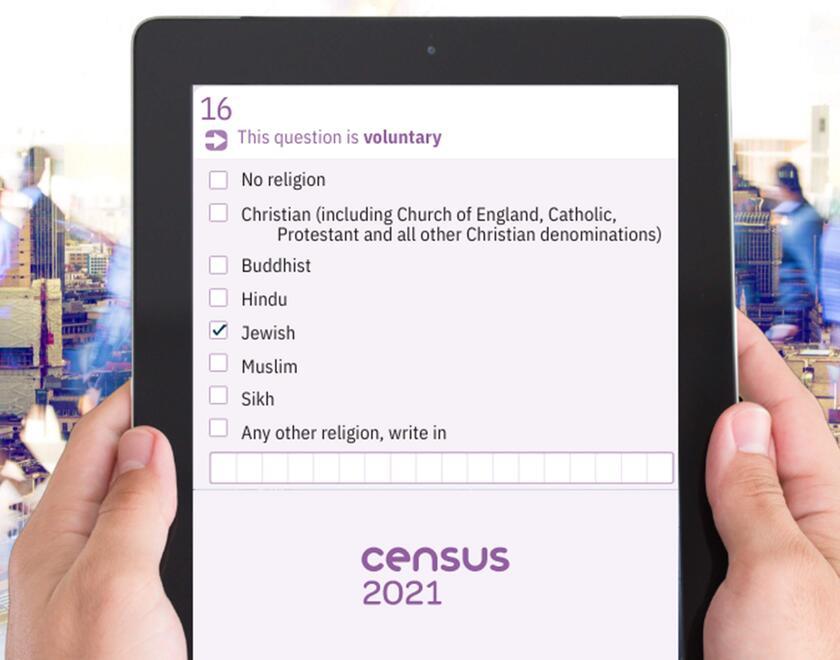
While the national census includes a voluntary question on religion that contains a ‘Jewish’ checkbox, it does not ask about Jewish denomination. This means it is quite challenging to establish whether different sub-sections of the Jewish community were counted accurately. 

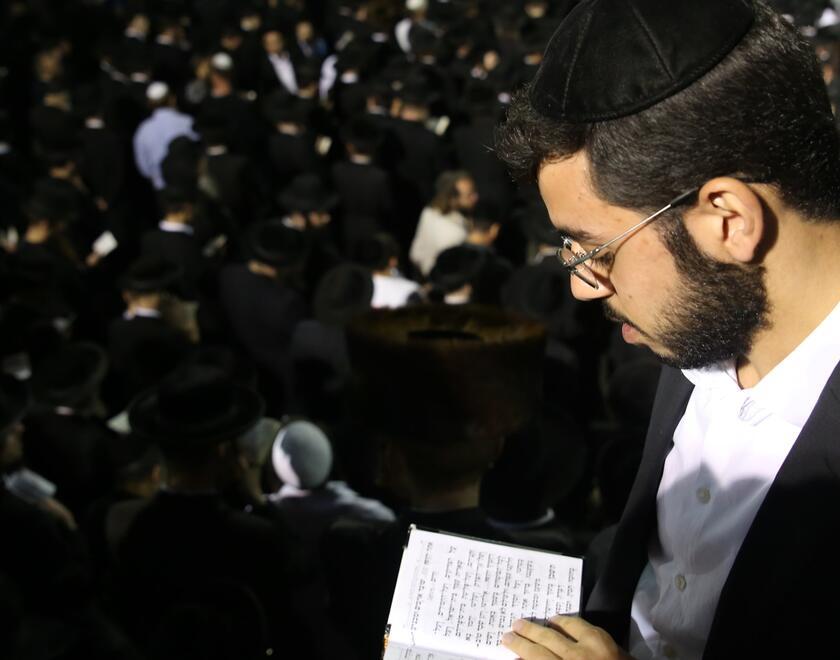
Of particular concern is the count of the Haredi (Strictly Orthodox) population. There are several reasons why. First, Haredim are an economically vulnerable group, and providing an adequate level of service and welfare provision to them depends on having an accurate understanding of their numbers. Second, they are a rapidly growing section of the Jewish population that today accounts for as much as one in four of all Jews in the UK, including a majority of all Jewish children. And third, linked to this, a Haredi undercount means the overall Jewish population is also undercounted. Given that Jews make up just half of one percent of the total, this is important.

Using Haredi telephone directories as comparators

Ever since the introduction of a religion question into the 2001 Census, scholars have used a range of methods to demonstrate that the Haredi community has been consistently undercounted. One approach has been to exploit the fact that Haredi geography differs from the rest of the Jewish population. A large proportion of Haredim live in geographically concentrated communities far from the Jewish mainstream. The main Haredi centres are in Stamford Hill in Hackney; Gateshead, near Newcastle; and Broughton Park in Manchester, with smaller groupings in North West London and Canvey Island in the Thames Estuary. 

So what did we do? Each Haredi community maintains a telephone directory, much like the old Yellow Pages. A close examination of the data from these directories allows us to see how many Haredi households there are in specific postcode sectors, information that can then be compared with the geographically equivalent household data on Jews from the 2021 Census to see if any discrepancies emerge.

Whilst no Haredi area is entirely free of non-Haredi, or ‘mainstream’, Jews, our analysis found that the Haredi populations in Stamford Hill and Gateshead were sufficiently dominant over the mainstream to allow reliable measurements. By matching postcode sector data from the 2021 Census with directory data in these areas, we found that the number of Haredi households listed in the community directories far exceeded the number of Jewish households counted in the census. In fact, there were 34% more Jewish households listed in the directories of Stamford Hill and Gateshead (6,063) than were counted in the 2021 Census (4,496). 

This significant difference poses a serious challenge for anyone seeking to use census data to better understand Haredim in these areas. In other Haredi areas, it was not possible to make accurate measurements due to the intermingling of the Haredi and Jewish mainstream populations.

Census data undercounts Haredi households, not just individuals.

As noted above, the notion that Haredi Jews have been undercounted in censuses is not new. Scholars have demonstrated that there has been a Haredi undercount in all three of the last British Censuses that included a religion question. So why is this finding particularly valuable, beyond underlining what was already suspected? Its uniqueness lies in describing an undercount based solely on households.

Most previous estimates of the Haredi undercount have focused on individuals, not households. This led to the conclusion that the main cause of the Haredi census undercount was the length of the paper census form, which, in 2021, allowed only five people per household to be entered, unless an extension form was requested. Yet the average Haredi household has at least five members. But evidence from this new analysis suggests the problem may well be broader than that, with large swathes of Haredi households apparently missing entirely from the census data.

In the future, these findings will assist in making more accurate estimates of the size of the Haredi population, and therefore the wider Jewish population, in England and Wales. But it is also hoped that both the Haredi community and the census authorities will carefully consider these and similar assessments and put measures in place to avoid any future undercount of Haredi Jews, to the benefit of everyone.


The full reference to the journal article is: Graham, D (2026). ‘The enumeration of strictly Orthodox (haredi) Jewish households in the 2021 Census of England and Wales’, Journal of Population Research, 43:6, https://doi.org/10.1007/s12546-025-09414-w.

You can view the paper by clicking this link: https://rdcu.be/eZTLz

Images of people

Dr David Graham

Senior Research Fellow

Dr David Graham

Senior Research Fellow

David is a Senior Research Fellow at JPR, an Honorary Associate at the Department of Hebrew, Biblical and Jewish Studies at the University of Sydney...

Read more

You might also like: