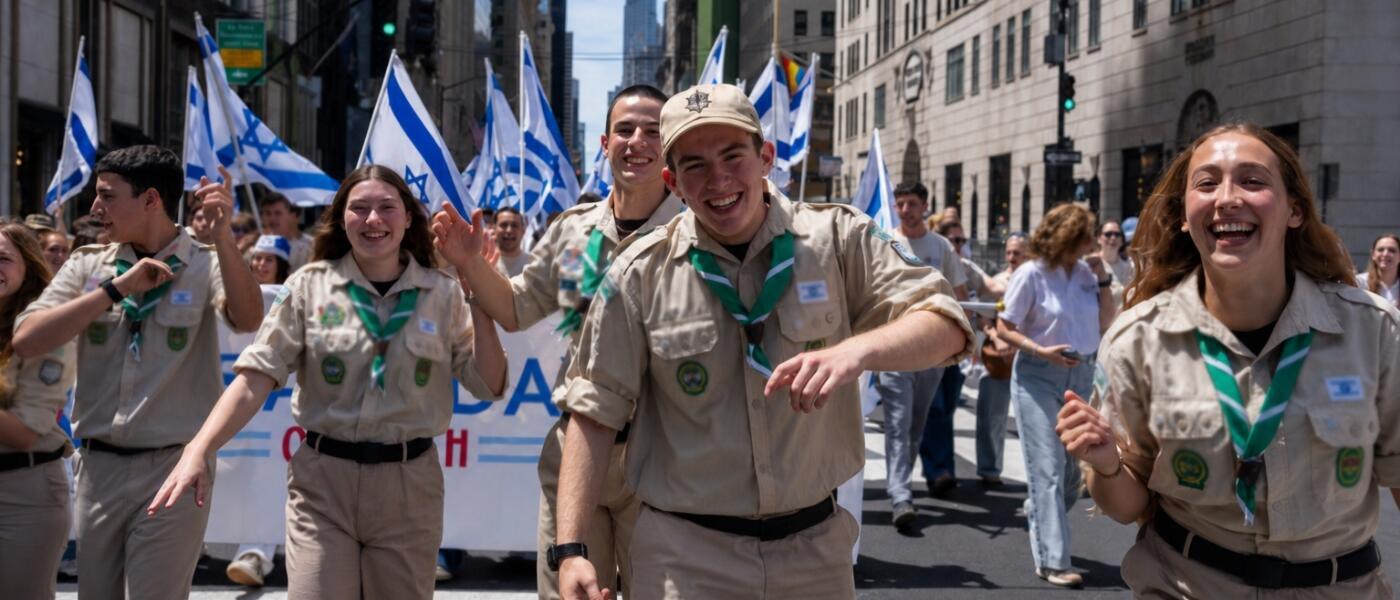
Summer camps, Israel tours and Jewish youth movements are not ‘nice-to-haves’. Our research shows they clearly matter.
Dr Jonathan Boyd
Dr Jonathan Boyd
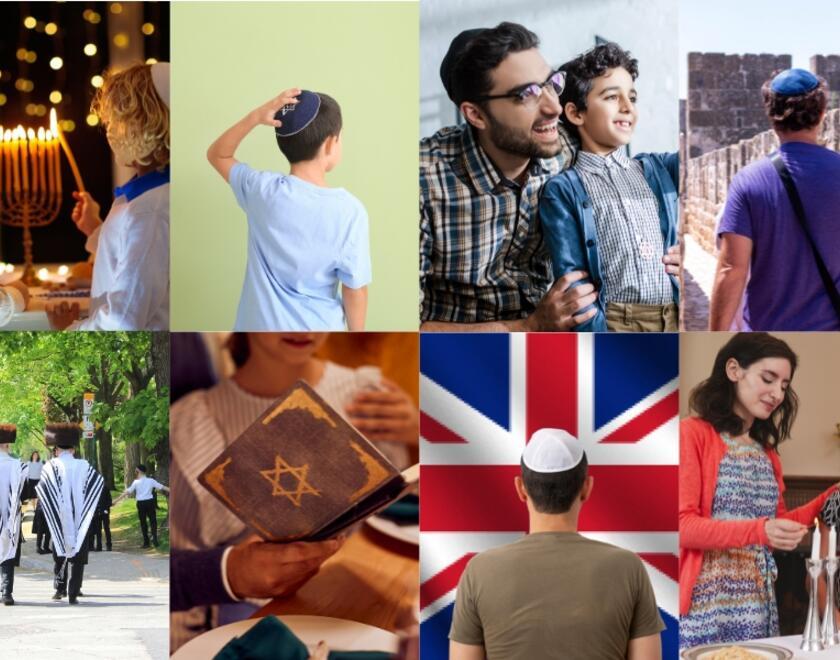
Every summer, thousands of young Jews head off to camps, youth movement activities and Israel tours. To many parents, these weeks can look like friendship, fun and late nights; enjoyable opportunities for their children to spend time with Jewish peers before the serious work resumes when school starts again. To the wider community, they are often viewed as a nice add-on to Jewish life - valuable, but not requiring the same expertise, thought or financial investment as schools.
That may be a mistake. The recent JPR study, What works?, examined the impact of different Jewish experiences on adult Jewish identity. Its findings are deliberately cautious. Jewish identity is complex, and no single programme guarantees a strong Jewish future. Yet among the experiences with measurable impact, informal educational structures - youth movements, camps, Israel programmes and university Jewish societies - very clearly matter.
Indeed, while the long-term impact of both Jewish schooling and youth movements is limited, youth movement involvement appears more impactful than Jewish schooling in several respects.
That finding should give us pause. Over recent decades, British Jewish life has seen a major expansion of Jewish schooling while youth movement participation has declined. The danger is that we have quietly assumed that one form of Jewish education can substitute for another.
It cannot. The first reason is an old educational idea, deeply embedded in Jewish thought: people learn by doing. John Dewey argued that education is not simply the transmission of knowledge but the construction of experience. We learn through participation, reflection and meaning-making. Jean Lave and Etienne Wenger developed a similar insight, arguing that learning happens through participation in communities, and that identity itself is formed through belonging and engagement.
At their best, youth movements, camps and Israel tours embody exactly this approach. They turn Jewishness from a subject into an environment. A teenager does not merely learn that Shabbat can be meaningful; they experience it with friends. Young leaders do not simply study leadership; they lead groups, make mistakes, resolve conflicts and discover that Jewish responsibility is something they can practise and own.
Identity is rarely formed through information alone. It is mainly formed through relationships, habits and shared experiences. At their best, camps and youth movements function as miniature Jewish societies, with their own rituals, humour, role models and responsibilities. Young people are not only taught Jewish identity; they rehearse it. They learn that Jewishness is not simply inherited from parents or delivered by teachers, but lived with friends.
The second reason is choice. Most childhood Jewish experiences are not really choices at all. Parents choose the school, decide whether candles are lit at home on Friday night and determine which opportunities are available. But sooner or later every young person has to decide what to do with what they have inherited.
This idea has deep roots in educational philosophy. Education is not simply about transmitting a tradition; it is about cultivating the capacity to choose it. Erik Erikson argued that adolescence is the period when people move from inherited identities towards identities they actively commit to. The key question becomes not simply, ‘Who am I?’ but ‘What will I choose to become?’
Read through that lens, one of the most striking findings in the JPR report concerns membership of a university Jewish society (JSoc). JSoc involvement is associated with seven of the eight dimensions of Jewish identity measured in the study. The report cautions that this does not necessarily mean JSoc involvement causes stronger identities. Rather, it suggests that those who join may already be on a path towards Jewish engagement.
But that is precisely the point. By the time young adults arrive at university, much of the formative work has already been done. Camps, youth movements and Israel programmes help make later Jewish engagement feel familiar, meaningful and worth choosing.
None of this means informal education is a silver bullet. In fact, the JPR study finds that the Jewish home environment matters most. Orthodox and Traditional upbringings are the strongest predictors of identity outcomes, and practices such as lighting Friday night candles are associated with many of them. The home remains the primary site of Jewish formation.
But homes need partners. Schools and synagogues clearly matter in this respect. But informal educational experiences do something distinctive: they create lived Jewish communities in which young people can experiment, belong, lead and ultimately choose.
If we want a confident next generation of British Jews, we should stop treating informal educational programmes as optional extras and invest in them fully. At their best, they are places where Jewishness becomes not only something young people are taught, but something they experience as real, meaningful and their own. There are very few substitutes for that.

Executive Director
Executive Director
Jonathan has been Executive Director of JPR since 2010, having previously held research and policy positions at the JDC International Centre for Community Development in...
Read more